





Teen Spirit

TEEN SPIRIT at TIFF.25: A Program Created by Gen Z for Gen Z
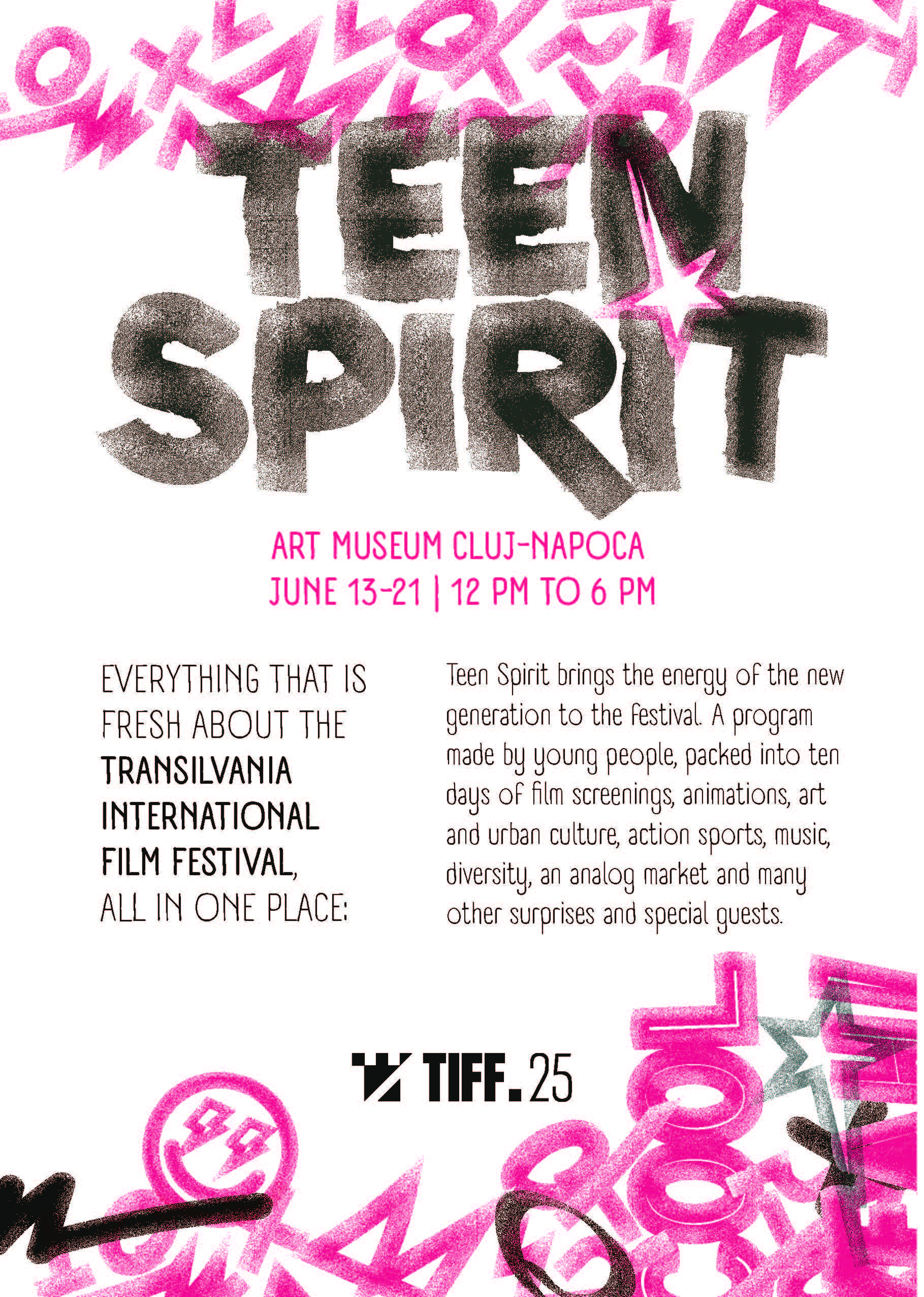
The Transilvania International Film Festival (June 12–21, 2026, Cluj-Napoca) continues to create space for a new generation of cinephiles and creators through Teen Spirit, a program which, alongside its competitive section juried by teenagers, will also include a special initiative this year: a festival program designed entirely by young people. Bringing energy, diversity, and alternative formats to TIFF, the program features screenings, workshops, analog markets, sports, music, urban art, and conversations around topics relevant to the younger generation.
Following a call launched among TIFF volunteers, several teams were formed and invited to propose program concepts dedicated to Gen Z audiences.
The winning project was developed by a group of eight young people aged 18 to 25, who will curate and implement a special program during the festival, at the Cluj-Napoca Art Museum, with free admission. Updates about Teen Spirit will be shared on Instagram and TikTok at @teenspirit.tiff.
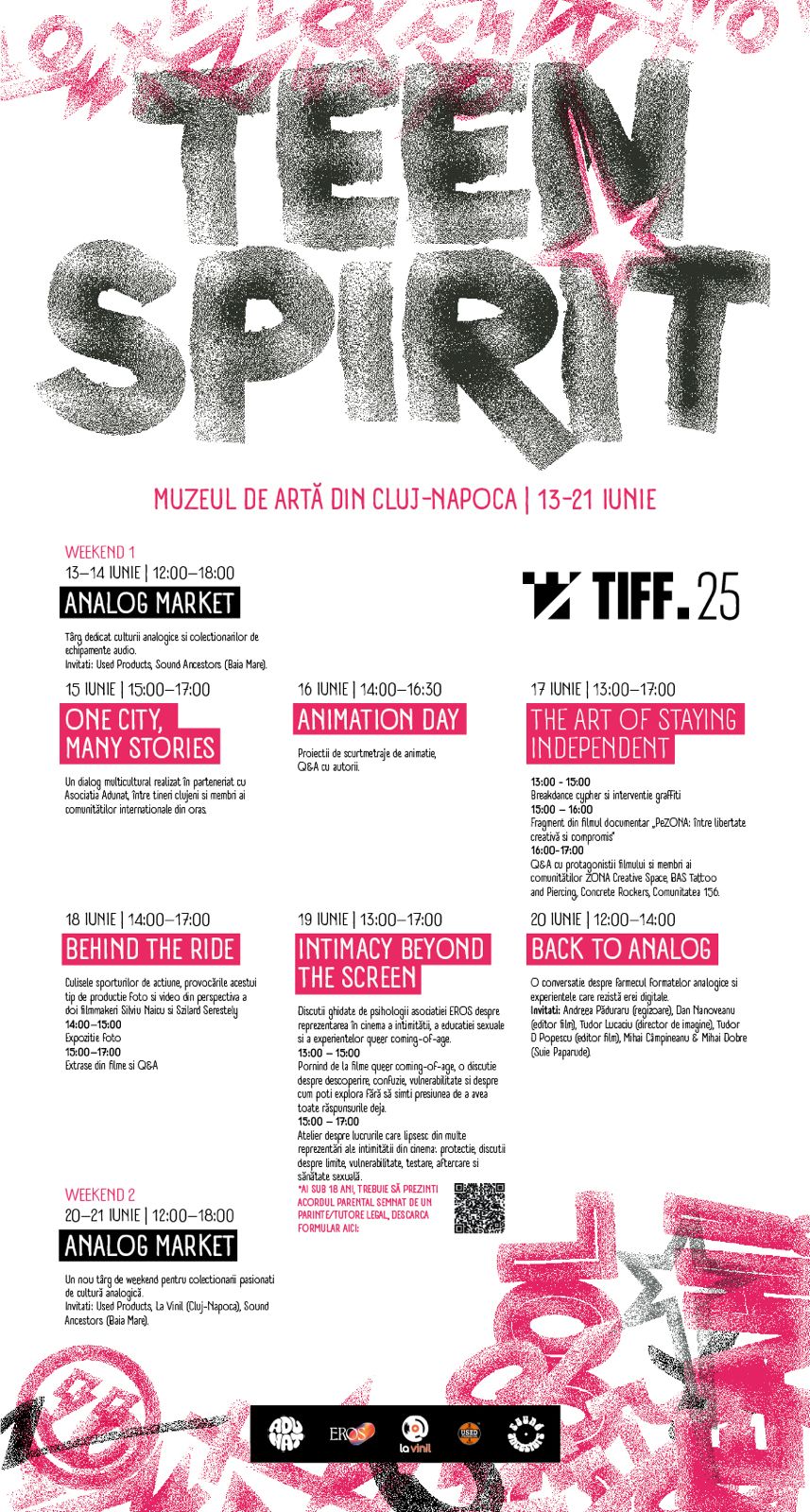
Weekend 1 — June 13 & 14 — Analog Market — 12:00–18:00
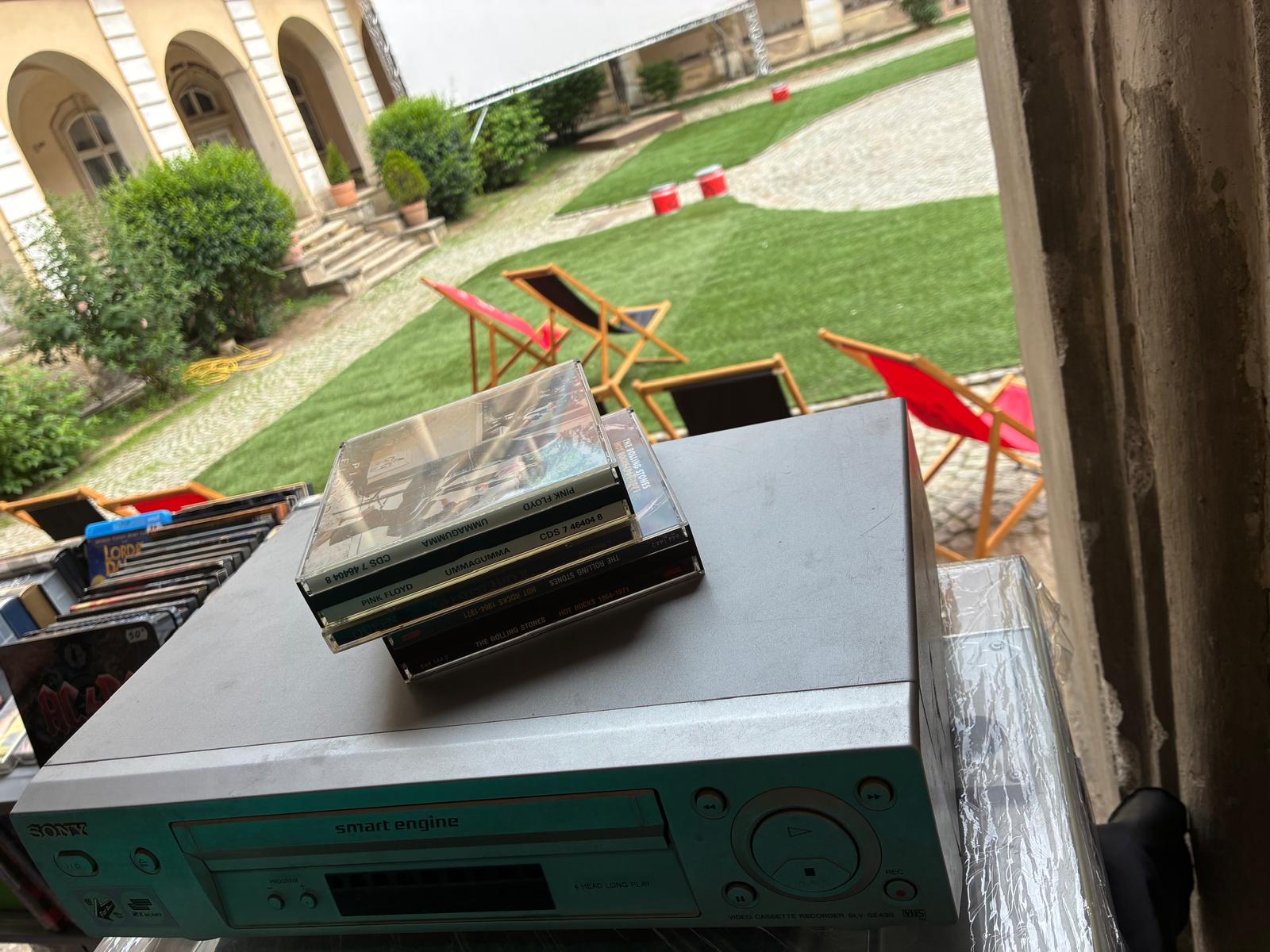
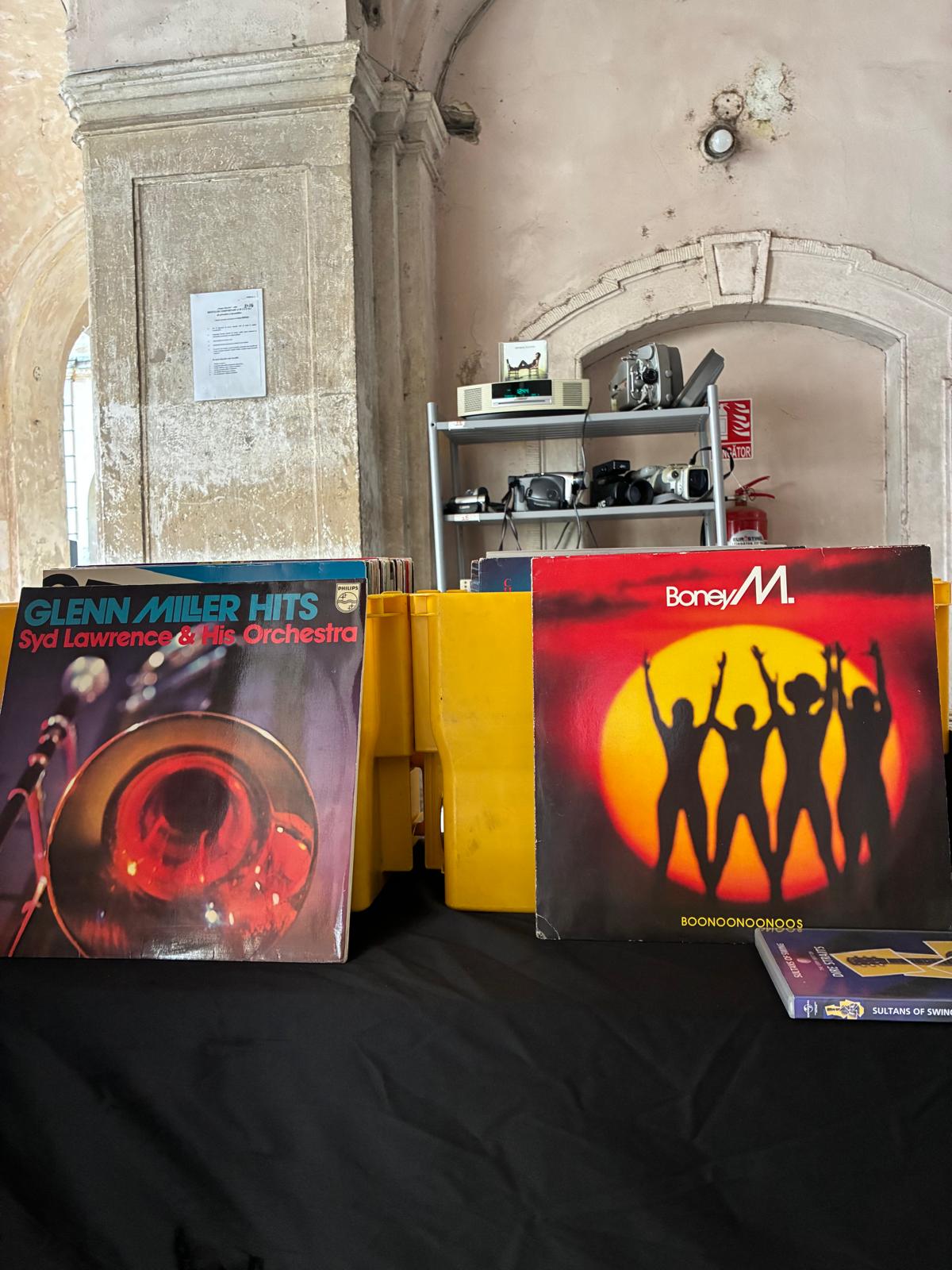
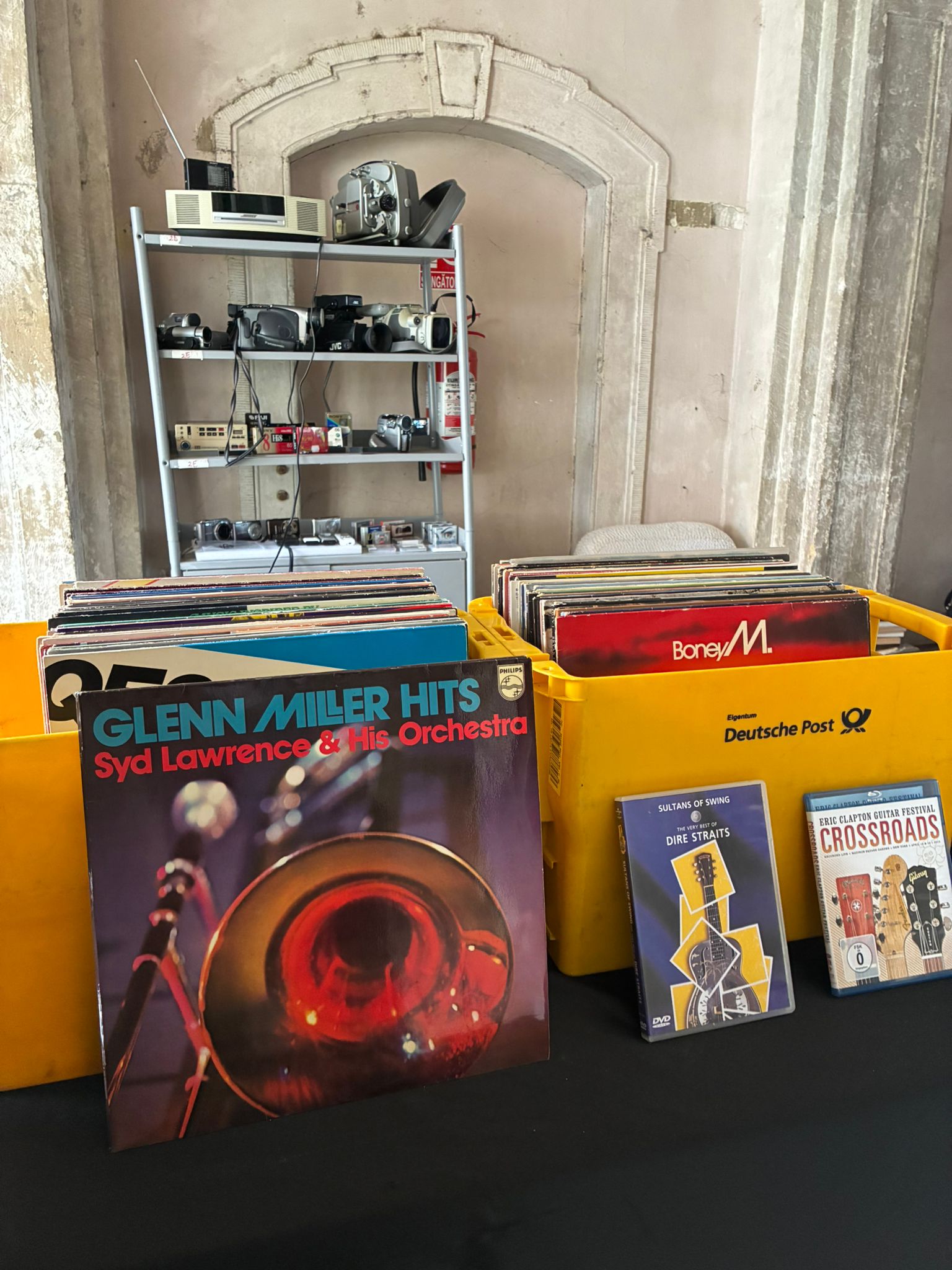
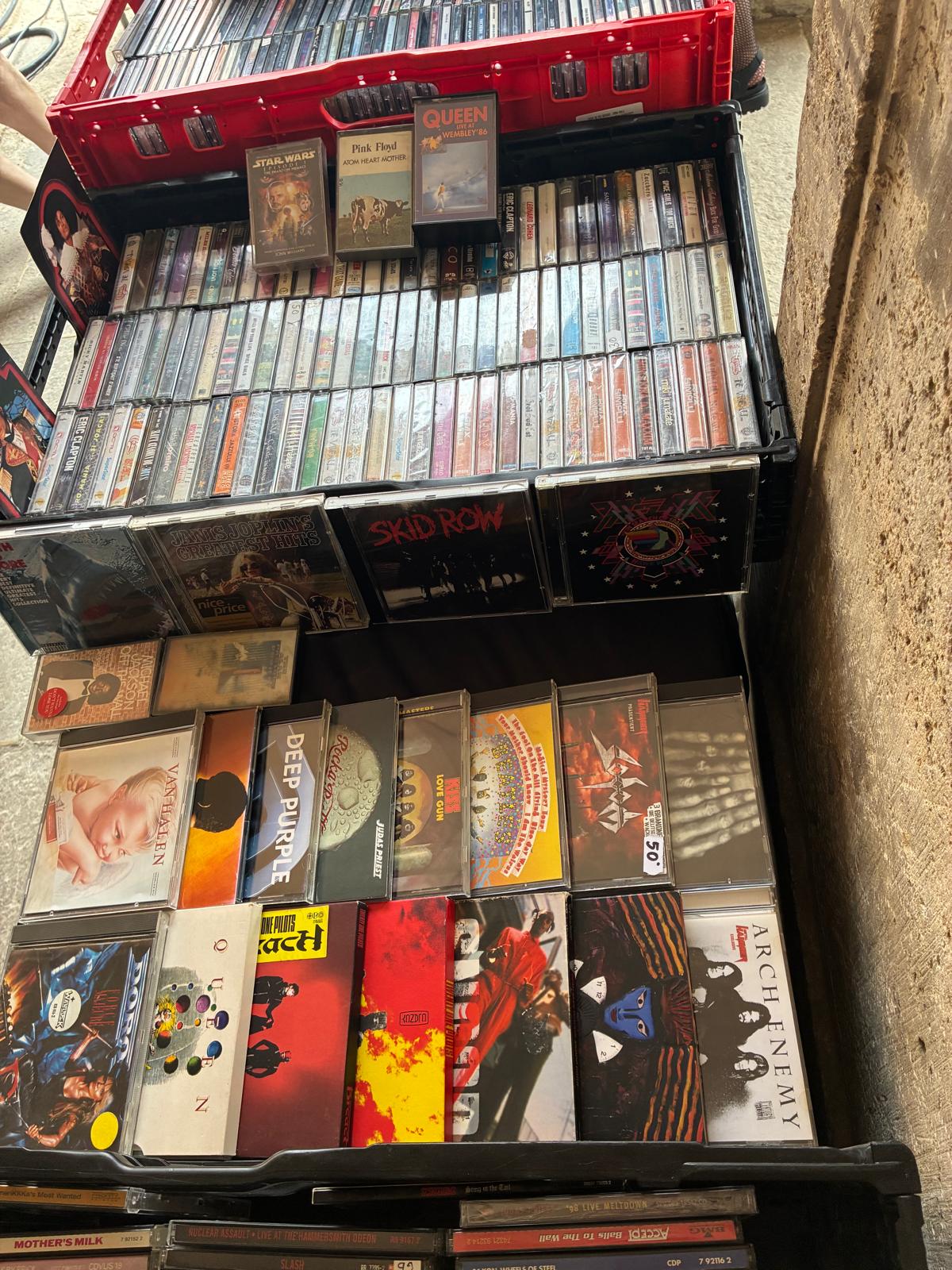
A market dedicated to analog culture, where visitors can discover and purchase vinyl records, DVDs, Blu-rays, VHS tapes, audio-video equipment, and other media objects curated by invited collectors and sellers. A space for enthusiasts, collectors, and anyone curious to explore the physical formats that continue to inspire us today.
Guests: Used Products, Sound Ancestors (Baia Mare)
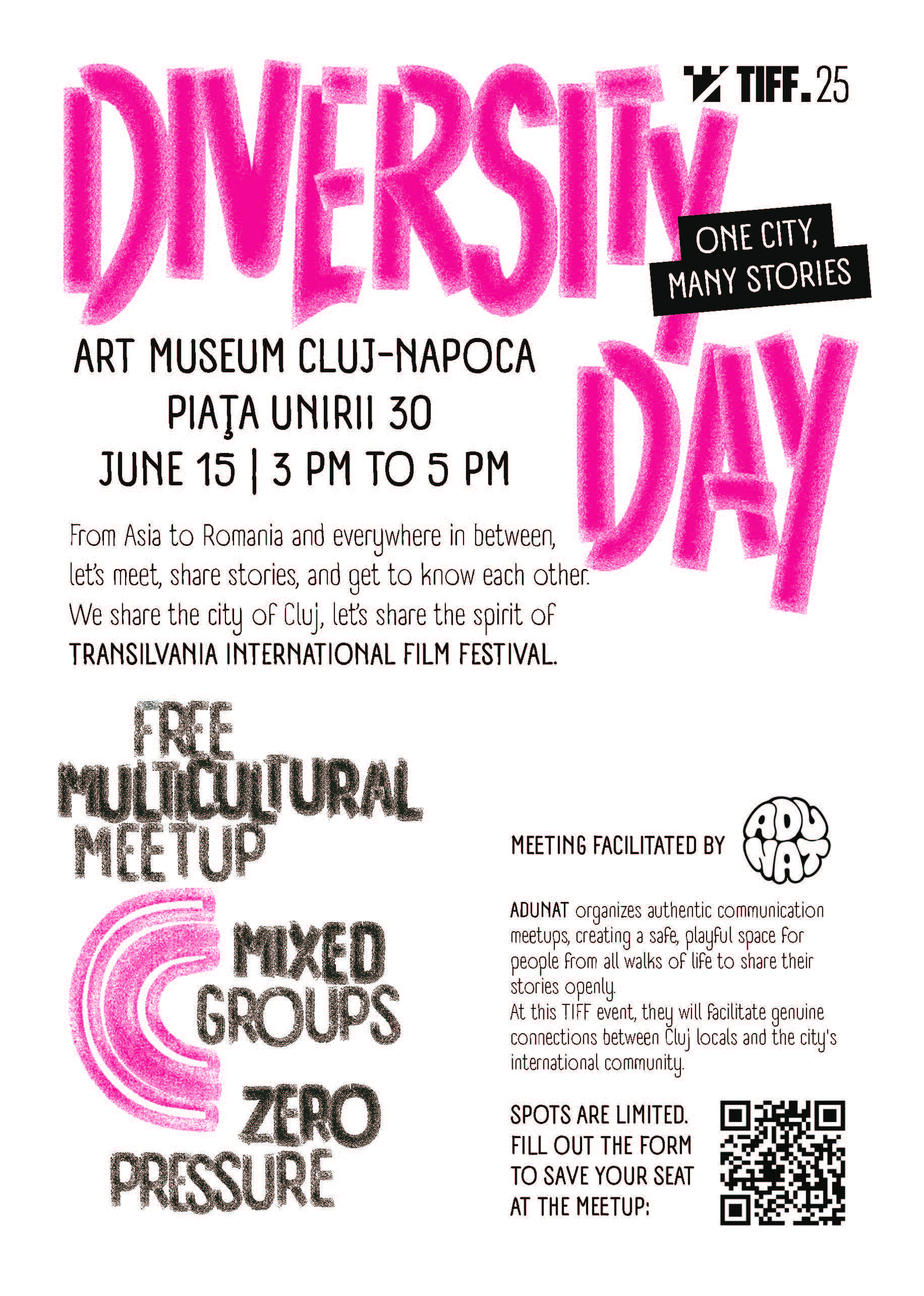
Monday, June 15 — One City, Many Stories — 15:00–17:00
A multicultural gathering organized in partnership with Adunat Association, bringing together young people from Cluj and members of the international communities living in the city. Through dialogue, shared stories, and mutual discovery, we will explore together what it means to build an open community based on respect and authentic encounters.
Tuesday, June 16 — Animation Day — 14:00–16:30
Screenings of short animated films made by young creators, followed by discussions with the authors.
Wednesday, June 17 — The Art of Staying Independent — 13:00–17:00
Through the collaborative documentary project PeZONA: Between Creative Freedom and Compromise, we will explore the journeys of independent artists and the practices through which they build their identity, communities, and financial sustainability. The screening will be followed by a Q&A with the protagonists, members of ZONA Creative Space, BAS Tattoo and Piercing, Concrete Rockers, and Comunitatea 156.
Activities: film screening, Q&A, exhibition, collaborative graffiti intervention, and breakdance cypher.
Thursday, June 18 — Behind the Ride — 14:00–17:00
Two practitioners and filmmakers who document action sports will share footage, photographs, and stories from the field, exploring the challenges of filming in extreme conditions and the ways in which their passion for sport has shaped their authorial perspective.
Guests: Silviu Naicu, Szilard Serestely
Friday, June 19 — Intimacy Beyond the Screen — 13:00–17:00
Together with the psychologists of the EROS Association, we propose two workshops for participants. The first looks at what is often missing from conventional representations of intimacy in cinema: protection, conversations about boundaries, vulnerability, testing, aftercare, and sexual health. The second starts from queer coming-of-age films and opens up a conversation about becoming, through reflection exercises, guided discussions, and the rewriting of a film scene.
For participants under the age of 18, a parental consent form is mandatory and must be presented in physical format, printed and signed by a parent or legal guardian. The form can be downloaded here.
Saturday, June 20 — Back to Analog — 12:00–14:00
A conversation about the charm of analog formats, from technology and creativity to experiences that cannot be replicated digitally.
Guests: Andreea Păduraru (director), Dan Nanoveanu (film editor), Tudor Lucaciu (cinematographer), Tudor Popescu (film editor), Mihai Câmpinenau and Mihai Dobre (musician / Șuie Paparude)
Weekend 2 — June 20 & 21 — Analog Market — 12:00–18:00
A new weekend dedicated to collectors and analog culture enthusiasts, with vinyl records, films, audio equipment, and other discoveries for lovers of physical formats.
Guests: Used Products, La Vinil (5 Napoca St.), Sound Ancestors (Baia Mare)
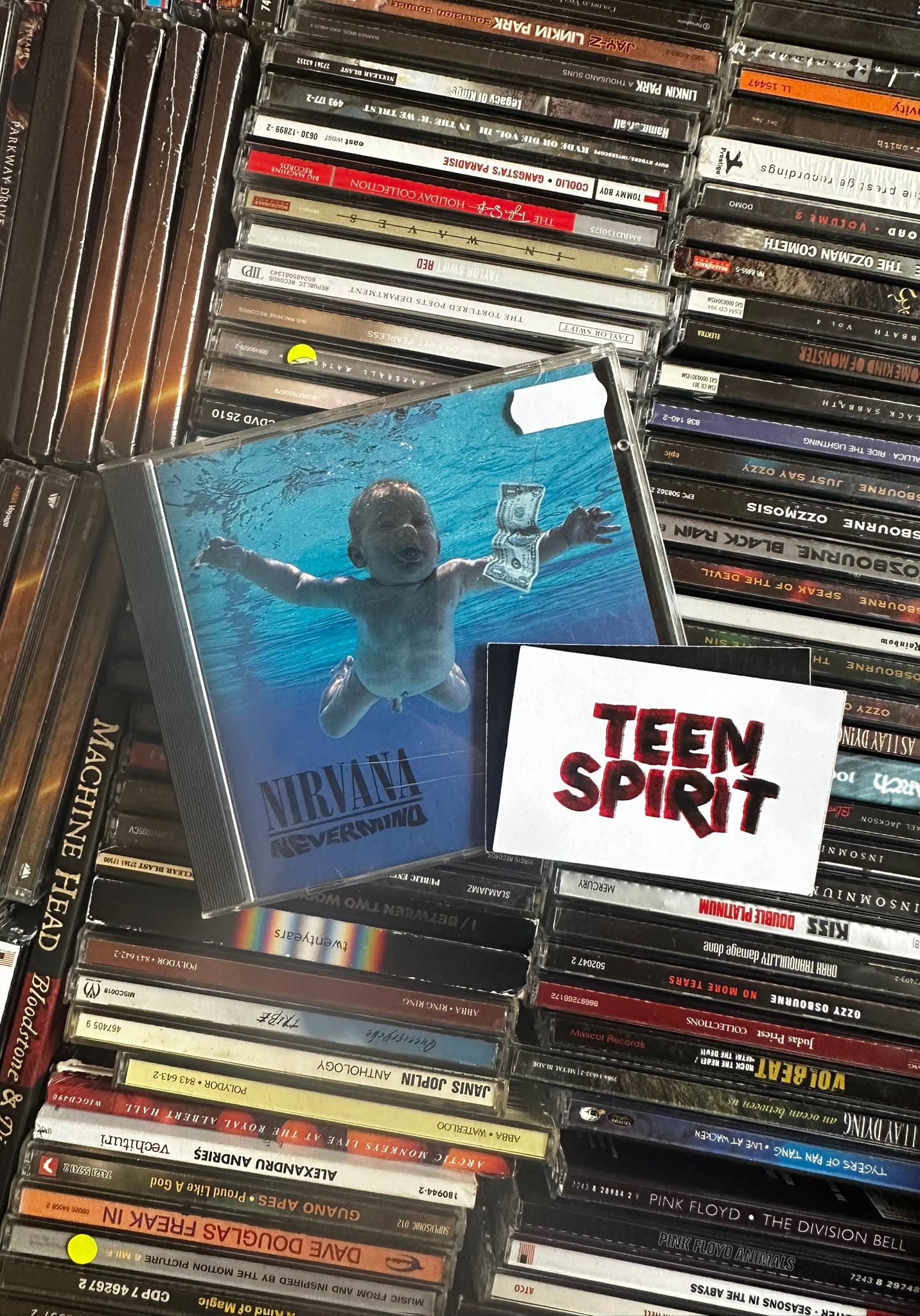
Saturday, June 13, a market dedicated to analog culture took place, where visitors discovered and purchased vinyl records, DVDs, Blu-rays, VHS tapes, audio-video equipment, and other media objects carefully curated by invited collectors and vendors. The event brought together enthusiasts, collectors, and anyone curious to explore the physical formats that continue to inspire us today.
Guests: Used Products and Sound Ancestors (Baia Mare).


Passion for analog formats and physical media culture is making a strong comeback in an increasingly digital age. Many of us grew up watching Disney cartoons recorded on VHS tapes, seeing footage of our christenings on CDs, and enjoying countless action films on DVDs. Driven by a desire to bring this timeless universe back to life, the Analog Fair launched a new initiative within the festival’s Teen Spirit program—a section curated by Gen Z, for Gen Z.
Held during the festival’s first weekend, from 12:00 PM to 6:00 PM, the fair transformed the foyer of the Art Museum into a welcoming gathering place for anyone interested in purchasing vinyl records, music cassettes, or films on VHS, DVD, and Blu-ray.
Beyond the exhibition of vintage video cameras and Nokia phones reminiscent of the one used by Neo in The Matrix, the true value of the fair lies in the stories of the people behind the tables.
One of them is Sorin Marchiș, a collector from Baia Mare who gathers everything from music cassettes to rare vinyl records. For him, “the passion for music came out of nowhere,” and streaming remains the easiest way to access almost any recording. “I’m not completely against streaming—I listen to it sometimes too—but I still prefer tape or vinyl,” he says.
At the neighboring stand are Dumitru and Darius Lazăr, father and son, who turned their shared enthusiasm into Sound Ancestors, a shop based in Baia Mare. Their stand showcases vintage audio equipment and rare VHS tapes, many sourced directly from local flea markets. It all began as a game involving a turntable and a few records picked up at fairs. Before long, they caught the “crate-digging” bug. “We bought whatever looked interesting or different, always searching for new sounds,” they explain. For them, a music collection is “like a huge puzzle that is constantly evolving.”
They both hope visitors will have the courage to explore unfamiliar genres. “We often hear people say that good music isn’t being made anymore, but if you actively look for it, you quickly discover that there are incredible artists in every genre.”
Eduard Lautaru and Norbert Kun-Mackzi, representing Used Products Romania, have observed how streaming platforms have shifted the focus from ownership to access, turning monthly subscriptions into the new norm. Yet in their stores they continue to witness how nostalgia and the desire for authenticity bring vinyl records, collectible CDs, and retro gaming consoles back into the spotlight.
“If physical formats were once a necessity, today they represent an experience, a passion, or a collectible object with strong emotional value,” they note.
We look forward to welcoming you again next weekend, June 20–21, from 12:00 PM to 6:00 PM, for a new selection of surprises waiting to be discovered.
One City, Many Stories: Romanians and Foreign Residents Gather Around the Same Table at the Art Museum
By Greta Cazan
Today’s Cluj is a vibrant and diverse place, where people from all corners of the world share the same streets, buses, and cafés. It was precisely this desire to bring together different realities and perspectives that inspired One City, Many Stories – Diversity Day, an event organized as part of the Teen Spirit program.
Hosted in the courtyard of the Art Museum on June 15, the event was organized in partnership with Adunat, a platform that facilitated dialogue among participants.
Romanians and foreign residents sat together at the same tables in mixed groups, with conversations revolving around life in Cluj, the things that make us happy, and what we would like to change in our communities.
Beyond the English and Romanian spoken around the tables, the evening’s shared language was curiosity about one another.
One of the participants was Kazi Amdadul, a master’s student from Bangladesh with a particular interest in migration studies. For him, the two-hour event felt like only twenty minutes. “The event helped us understand and respect each other as two different communities,” he said.
Ahamed Tawfiq, Kazi’s friend, studies at the Faculty of Business and has been living in Cluj since 2023. He is very fond of Romania and considers the city his second home.
“I came here to learn more about Romanians and about people from other cultures, whether they come from Ukraine, Syria, or Sri Lanka,” he explained.
Chathurika, an undergraduate student, attended the event because she enjoys meeting people from different immigrant communities and gaining a deeper understanding of Romanian culture.
“I wanted to understand what is happening in other cultures, and this was a great opportunity to do that,” she said.
The gathering in the Art Museum courtyard reminded everyone that, regardless of our origins or cultures, our needs are fundamentally the same: connection, respect, and a welcoming place to belong. The stories shared that evening helped create, if only for a few hours, a version of Cluj in which no one is a stranger.


Short animated films joined the TIFF.25 program
Author: Andreea Gabrian
On Tuesday, June 16, a screening of animated short films took place as part of the Teen Spirit program. The screening featured 18 animated films created by young Romanian directors (high school students, college students, and recent graduates), as well as two animated films by directors with many years of experience. Dedicating a screening exclusively to animated short films is a first for TIFF, and it drew a large, young audience that curiously stepped through the gates of the Art Museum, eager to engage with the world of animation.
Following the screening, a lively discussion took place between the audience and three of the filmmakers, who were pleasantly surprised by the audience’s interest, as evidenced by a multitude of questions. “I’m glad I got to see local animations from Romania. It’s a wonderful initiative to bring animation to TIFF, and it’s great that so many people showed up, people who were interested and had so many questions,” said Răres Andronic, director of the animated film “Not so public spaces.”
The idea behind the event stems both from a personal passion for animated films and from observations regarding the audiovisual content preferences of our friends and Gen Z. Many of us used to watch Japanese animated series, or “anime.” Some of us, perhaps, had lost the patience to sit through a feature-length film and preferred something shorter, so we’d occasionally watch a cartoon. What’s certain is that animated films enjoy considerable popularity, though primarily through streaming platforms and less so on movie theater screens.
Tomas Matei, director of the animated film “Laika” and a member of the Animation Incubator, who was present at the discussion, told us that over the years he’s felt a lack of opportunities to showcase animated films, being limited to his own computer and animations from abroad. “The fact that I can watch animated films right here in my own country is really cool, and so is this event, because I had the opportunity to meet a lot of really great people who share the same passion as me.” The discussion between the audience and the directors gave us a fairly comprehensive look at what it means to enter the world of film, to create animations, and all the challenges—as well as the joys—that come with this work. I’ve learned that for someone just starting out, short-form animation is one of the most accessible film formats. It doesn’t require actors, props, or a budget—resources that those just starting out often lack. But it does require a lot of time, dedication, and the commitment to spend days and nights drawing and editing the worlds that, timidly, begin to take shape. And all of this is done alone, by a young artist with a sheet of paper, a pencil, and a computer.
Cecilia Felmeri, director of the animated documentary “Matei, Matei” and a faculty member at the UBB School of Theater and Film, confirmed to us that animation cuts many production costs and, unlike live-action film, does not limit reality through a sterile portrayal. New elements can always be added—a detail in character design, a distinctive drawing style—to complement the message and contribute to the story.
In short, animation’s versatility as a medium of expression allows it to convey stories with underlying themes that would be difficult to achieve otherwise.


Text by Andreea Gabrian (Teen Spirit team)
On Wednesday, June 17, as part of the Teen Spirit program, we organized a series of activities aimed at bringing urban art and what it means to be an independent artist closer to the public, especially young people. To this end, we were delighted to have with us members of the ZONA Association and Community 156, with whom we had an informal conversation about the cool projects they are currently working on. They include multiple communities, with notable mentions to “niște grafferi anonimi”, Concrete Rockers, BAS tattoo and Trick It Up.
Bianca, from ZONA, is part of the production team behind the creative documentary “PeZONA: between creative freedom and compromise” and she told us that, within this documentary, they interviewed several communities from the underground scene: graffiti artists, tattoo artists, and breakers. “We document what freedom of expression means between compromise and community. Some of them, especially the graffiti artists, are gathering now in the museum’s courtyard to create a piece about community and, actually, about what we are documenting as well: this freedom of expression and of being together with people.” The screening took place inside the Art Museum in an artistic space that complemented the documentary’s message, a space where an art exhibition had been set up, gathering graphic art, painting, linocut prints, and photography. “The entire artistic intervention we are creating, together with the documentary we will screen, expresses exactly this: that there are so many of us who have something to say, and we do it through different mediums that may or may not be called underground,” Bianca also told us.
As mentioned, several graffiti panels were installed in the museum courtyard. We were joined by Georgian Sergiu Mazerschi, teacher at the “Romulus Ladea” High School of Arts in Cluj-Napoca, founder and president of Community 156, together with students who are part of the team. Each student created a drawing representing an element directly connected to ZONA’s documentary. “I think it’s super cool and I’m very excited that so many students came and that they feel good while drawing. I’m happy that we are present at a well-known festival and that people come to see these young people drawing. After all, this is the role of our association: to get students out of their school desks and help them experience life a little differently”. Natalia Bob, a student and member of Community 156, told us that “I like doing graffiti because it allows me to express myself on such a large surface. I’m no longer limited to a sheet of paper. I’m glad TIFF includes other artistic activities besides the world of film.”
Ruxandra Brăfălean, founder of the ZONA Association, told us that this documentary, which they were about to screen is their newest project, one they plan to continue for many years to come. It is a collaborative documentary project, more of an archive about independent artists. It will be made available on an online platform to support artists from different fields who work independently.
In a way, the project is connected to the idea that creative freedom exists at every level of production, even when art becomes commercial. The goal of the ZONA project is to professionalize Romania’s independent arts sector. “We started with this pilot episode in Cluj, but we want to continue the project in Bucharest and other cities and later reach as many artists as possible from different artistic fields, from music and visual arts to theatre, performance, and so on. But for the first episode, we documented three communities: one of graffiti artists, one of breakers, and one of tattoo artists.”
The project reached TIFF through funding from the Cultura Face Bine Fund. One of the purposes of screening the pilot episode at TIFF is to gather feedback from both the audience and the artists featured in the documentary: what they would like to see more in the film, which questions seem most relevant and deserve deeper exploration and which artists or communities should be included. The entire process is collaborative. “It’s a calm, pleasant atmosphere. We’re happy to meet both old and new friends here, and we realize how small the underground world really is. What we actually needed was a context in which we could meet with one another,” said Cosmin Sandu, part of the ZONA team on the production side.
As the conversation continued, we realized that everyone has different interpretations of the term “underground.” In Ruxandra’s view, “this word, underground, has many different definitions for different people and is used in different ways: authenticity, creative freedom or the compromises you make once you become commercial. Whether it’s a style or a state of mind, a kind of culture associated with this word, we are trying to better understand how the people in the communities we document perceive this term. However, it is not a main word that we necessarily use to define the project or the artistic scene, we prefer to call it urban art.”


Text by Greta Cazan (Teen Spirit Team)
Extreme sports films are not born on film sets, and the interior of the Art Museum was the witness to this reality. The fifth day of the Teen Spirit program gathered the community of adrenaline lovers for a few hours, during the Behind the Ride panel. The guests were Silviu Naicu and Szilard Serestely, two practitioners and filmmakers who dedicate their activity to documenting extreme sports.
The young people got to see/discovered (vezi ce merge mai bine) what it truly means to film under extreme conditions and how it is to work directly with athletes from the skater, rider, or snowboarder communities. The discussion evolved into a dialogue about how a passion for sports shapes your perspective behind the lens, and how different this process is from a regular shoot. Both explained that they want to move from quick social media clips to stories with substance: ’’We are trying to go further and document deeper themes. We are against these 30-second fast-cuts. We believe there is still an audience that has the time to truly engage with an authentic character’’, they said.
The event offered insight into what the work behind the camera actually entails, far beyond the final edited and polished product. Unlike large film crews, where tasks are clearly divided, the duo manages the entire creative and technical process alone, which requires a much higher level of personal involvement and dedication in every single shot. Vlad is in high school and is passionate about skateboarding. "I keep up with what Red Bull does to promote skateboarding, and I expected making this kind of film to cost a lot of money and for the backend costs to be huge. The fact that the two of them carry out absolutely everything on their own is incredible to me. Putting so much soul into it, putting up with the cold, the rain, and the snow just to bring out the story of passionate people, it’s just wow," he said.
Beyond the panel discussions, the event also features a photography exhibition built around the extreme sports they document, covering everything from skateboarding and riders to snowboarding. The works created by Silviu Naicu and Szilard Serestely can be visited at the Art Museum until Sunday, June 21, at 6:00 PM.


Expectations Versus Reality: The Conclusions of the EROS Workshops
Author: Ștefan Giurgiu
On Friday, the Museum of Art became the ideal setting for an honest conversation about vulnerability. The audience resonated with the two workshops organized alongside the EROS association, confirming the need for a safe space for taboo-free discussions.
The first workshop, "Becoming & Your Own Story," explored the courage to remain authentic. Although it centered on the representation of queer identity, the participants felt that the message was universal. It is about the natural process of coming of age, and the screened sequences demonstrated how cinema can educate us emotionally.
The second session, "What We Don't See on Screen," dismantled the aesthetics of major productions that create unrealistic expectations for us. Both specialists and spectators highlighted a common idea: intimacy has its awkward moments, and normalizing discussions about consent, care, and boundaries is essential. A highly appreciated example from this year's TIFF program was the film "Truly Naked," mentioned directly by the audience for the honest way it portrays these first experiences.
The discussions showed that the young people in attendance resonated most with films that present human relationships exactly as they are, with all their vulnerability, beyond filters and false expectations.


